PPC Management
Turn ad spend into qualified leads.
Put your budget into the keywords, messaging, and offers most likely to create real value.
PPC Management
The platform isn’t the business.
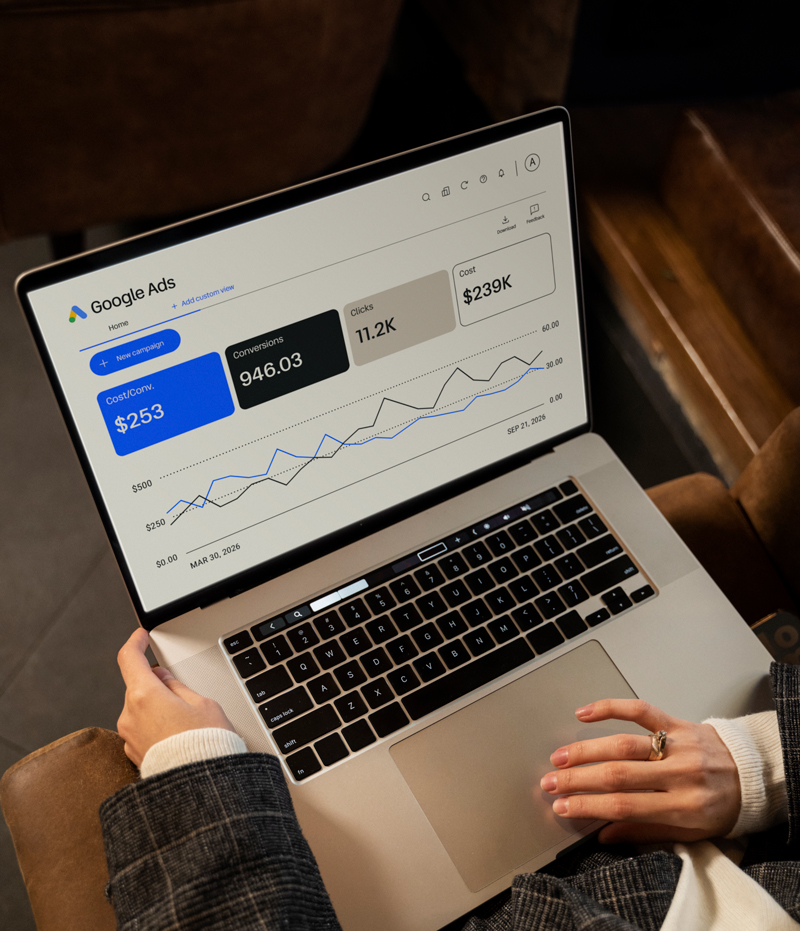
A campaign can look efficient inside Google Ads while producing weak leads, duplicate conversions, or traffic that goes nowhere.
Strong PPC connects audience intent, campaign strategy, messaging, landing pages, tracking, and lead quality. We measure more than clicks and platform conversions, tying campaigns to qualified inquiries and sales data where available so the dashboard reflects real, quantifiable growth.
Everything paid media needs to earn attention and turn it into growth.
What We Deliver
Paid Media Audit
A clear review of account structure, targeting, spend, conversion data, search terms, creative, and where the budget may be getting lost.
Campaign Strategy
A focused plan shaped by business goals, buyer intent, market demand, budget, and the types of leads your team can actually serve.
Campaign Build & Management
Campaign structures, bidding strategies, targeting, exclusions, budgets, and account settings built around clear objectives.
Ad Creative & Testing
Search ads, creative, offers, and messaging tested against what buyers care about and what earns qualified action.
Landing Page Optimization
Stronger alignment between the ad, the page, and the next step so qualified clicks don’t lose momentum after they arrive.
Paid Media Reporting
Ongoing analysis of spend, lead quality, conversion paths, and business outcomes, with a clear recommendation for what happens next.
Spend with intent. Optimize with evidence.
Paid media can move quickly, but speed without discipline gets expensive. Every campaign needs a clear reason to exist, dependable conversion data, and someone willing to question what the platform recommends.
Business outcomes first
Clicks and conversions provide useful signals. Qualified leads, sales opportunities, and revenue tell us whether the campaigns are doing their job.
Automation with oversight
Automated bidding and targeting can be powerful. They still need clean inputs, sensible guardrails, and human judgment.
Lead quality stays visible
A cheaper lead isn’t automatically a better lead. We look at who is responding, whether the business can serve them, and what happens after the inquiry.
Active budget stewardship
Priorities change. Demand shifts. Campaigns drift. We keep the budget moving toward the opportunities that continue to earn it.

Every click should have a job.
Good PPC performance depends on what happens before the click, after the click, and inside the data used to judge it.
How It Works
Search intent
The campaign should meet people at the right stage of the decision. We separate broad interest from searches that signal a real need and a reason to act.
Account structure
Campaigns, ad groups, audiences, and budgets need enough structure to stay controlled without becoming difficult to manage.
Message match
The ad makes a promise. The landing page needs to deliver on it clearly, quickly, and without changing the subject.
Conversion paths
Calls, forms, bookings, and other actions should be easy to complete and tied to the correct source, campaign, and keyword whenever possible.
Reliable data
Advertising platforms optimize around the actions they receive. Missing, inflated, or duplicated conversions can push the budget in the wrong direction.
Continuous testing
Search behavior, competitors, offers, and platform features keep changing. We test what matters and leave alone what is already doing its job.
Our Work


Google Ads needs more than a working account.
Automation can manage bids, placements, and targeting. It can’t decide which leads matter, whether the conversion data is trustworthy, or where budget creates the most business value.
Google Ads Management
Our Google Ads management combines campaign strategy, account structure, landing-page performance, and ongoing lead-quality insight to keep paid search aligned with the business behind it.
Good to Know
PPC Management FAQs
Why are we spending more without getting more leads?
Higher competition may be part of the issue, but it isn’t the only possibility.
The account could be targeting broader searches, optimizing toward the wrong conversions, or sending traffic to pages that create friction. Demand, budget allocation, lead handling, and tracking accuracy can also affect the result.
We look across the full system before assuming the answer is simply higher bids or more budget.
How do you measure PPC lead quality?
We connect campaign data with what happens after the inquiry whenever the client’s systems allow it.
That may include qualification status, service fit, geography, appointment or assessment completion, sales opportunity, and closed revenue. The goal is to learn which campaigns create leads the business can actually use.
Do we need dedicated landing pages?
Not for every campaign.
A strong existing service page may already match the search and provide a clear next step. Dedicated landing pages become valuable when the campaign needs a more focused message, offer, audience, or conversion experience.
Should we use Performance Max and automated bidding?
They can work well when the account has reliable conversion data, enough volume, and clearly defined goals.
Automation becomes less dependable when the platform is learning from duplicate conversions, low-value actions, or leads that look alike in the dashboard but have very different business value. We use automation where it helps and add boundaries where it doesn’t.
How quickly can PPC produce results?
Paid campaigns can begin generating traffic as soon as they launch. Meaningful optimization takes longer.
The account needs enough data to show which searches, audiences, ads, and landing pages are creating valuable outcomes. Early performance helps guide the strategy, but one week rarely tells the whole story.
Can PPC work if our website needs improvement?
It can still generate traffic, but the website may limit what that traffic becomes.
When the campaign is attracting qualified people but the page is unclear, slow, or difficult to use, increasing spend can amplify the wrong part of the system. We’ll identify whether the next opportunity sits inside the account or after the click.
Should we run PPC if our SEO is already strong?
Often, yes.
Paid search can provide immediate coverage, support priority offers, test new markets, and reveal which messages or searches drive action. SEO and PPC work best when their data informs one shared search strategy rather than two separate plans.
What should a PPC report tell us?
A useful report should explain what changed, why it matters, and what action follows.
Spend, clicks, conversions, and cost per lead are part of the picture. Lead quality, landing-page performance, tracking confidence, and business outcomes provide the context needed to make a decision.
Work With Us
Know exactly where your marketing stands. We’ll get to the root of it and shape the work from there.
Resources