Industry
Pet ProductsServices
Branding & DesignFrom a half-day workshop to a complete identity and packaging system: creating calm, confident companions, starting with a calm, confident brand
Most branding projects start with something: an old logo, an existing customer base, a legacy to honor or escape. This one started with a founder, a funded idea, and a problem millions of dog owners know intimately. The anxious dog.
Hush Pup Co came to us as a startup preparing to launch a line of anti-anxiety products for dogs: calming treats (with and without CBD), a food-topping spray, and ear muffs for noise-sensitive pups. The founder had the products, the conviction, and a phrase that would become the brand’s north star: creating calm, confident companions. What the company didn’t have yet was a brand. No logo, no voice, no packaging, no visual world. That was the assignment: build all of it, from a blank page to launch-ready.
Table of Contents
At a glance
- A brand built from zero: strategy, identity, voice, and packaging for a new company in an emerging category
- A half-day brand workshop and archetypal analysis to define the brand’s personality before a single pixel was designed
- A three-archetype brand foundation (the Lover, the Magician, and the Innocent) translated into voice, color, iconography, and illustration
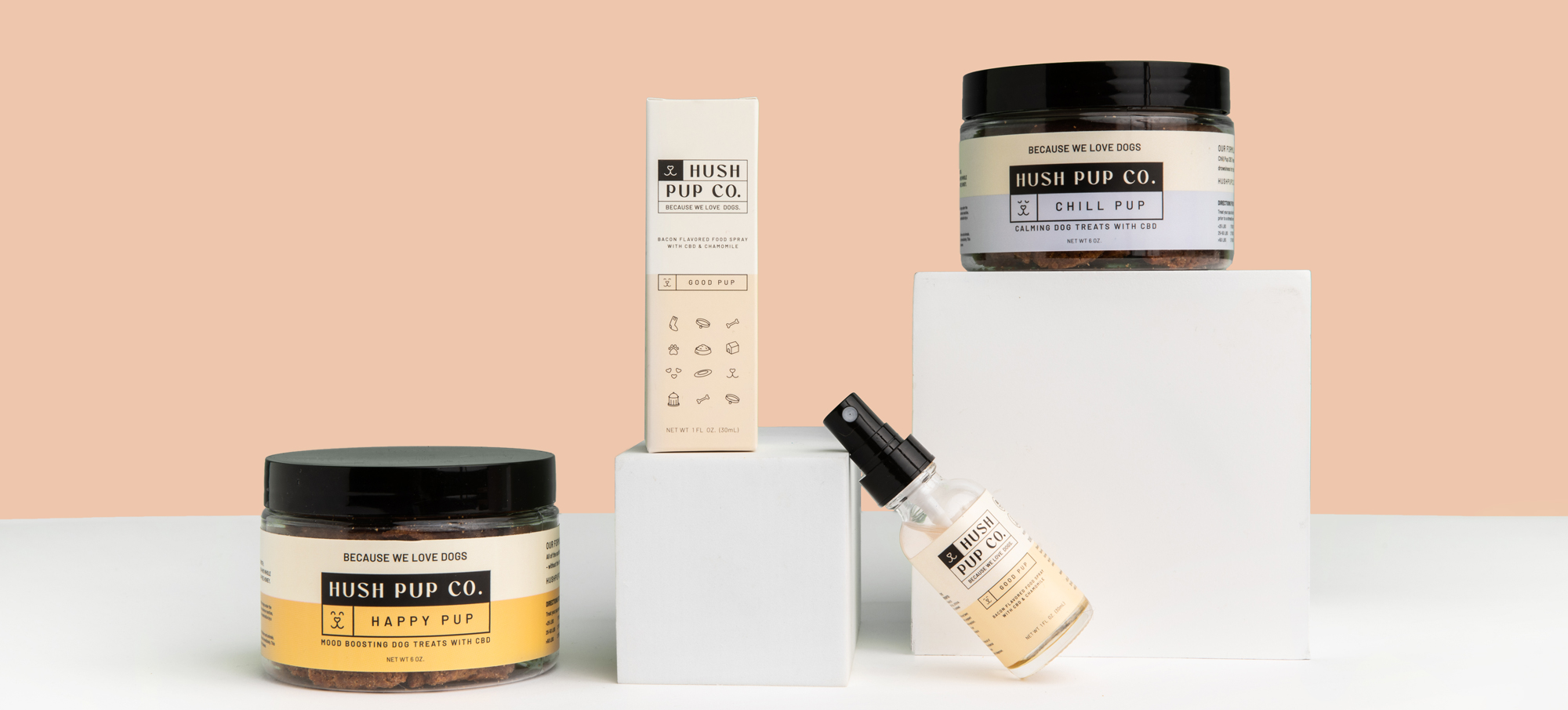
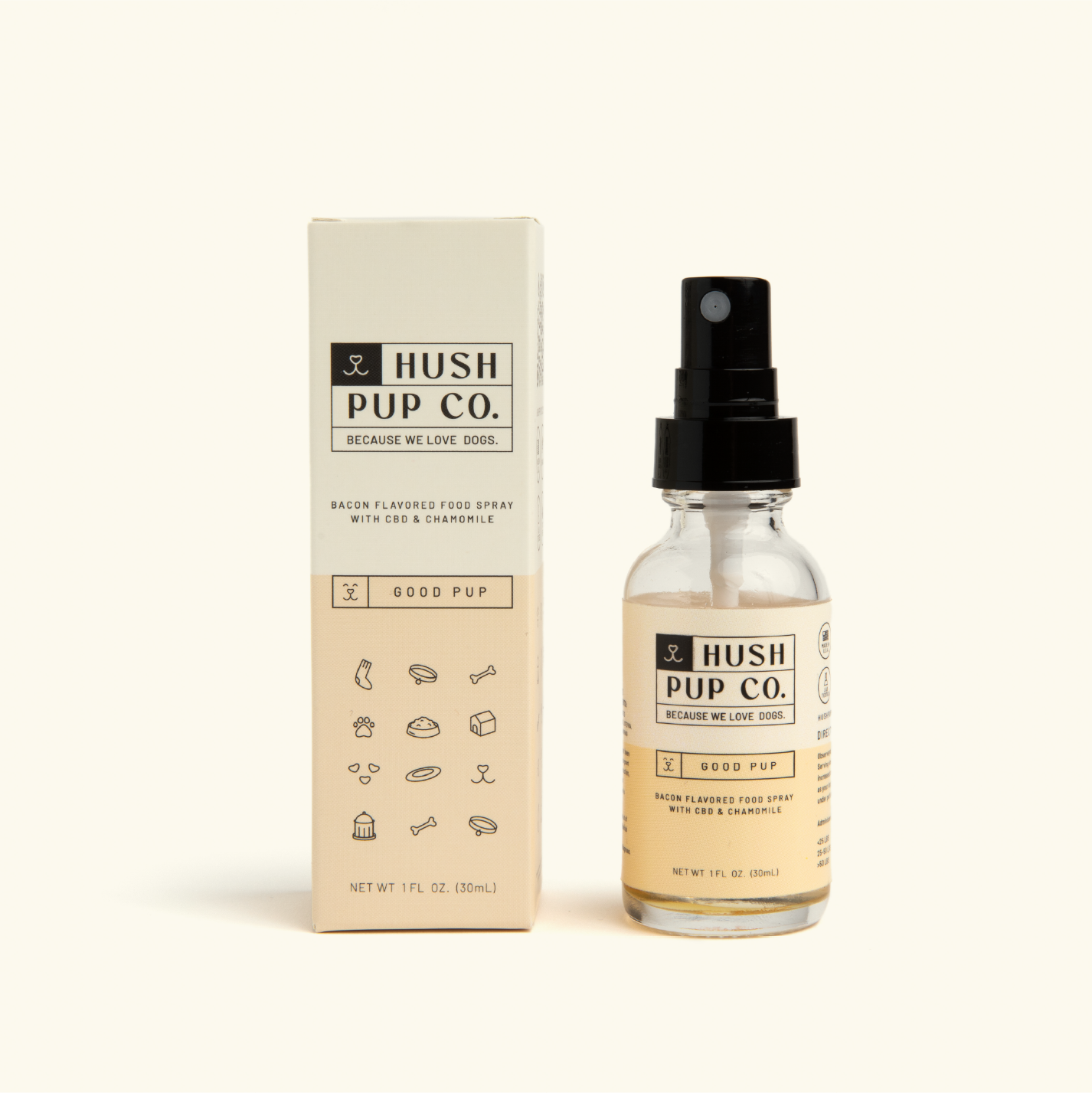
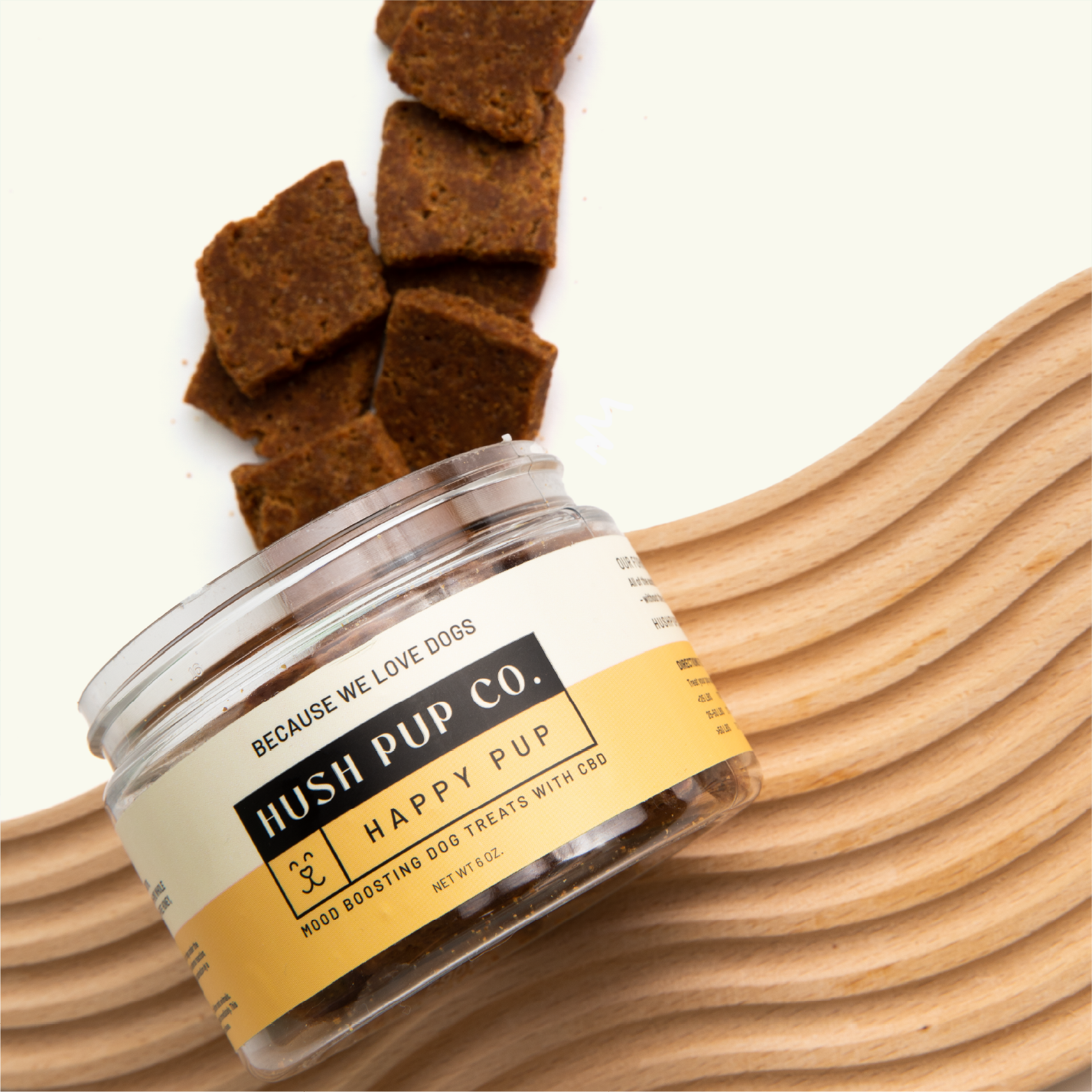
- Label and packaging design for six products across three distinct product lines: Good Pup, Chill Pup, and Happy Pup
- A complete brand guide plus shipping collateral, including stickers and custom packaging paper, so the brand arrived intact on the customer’s doorstep
Strategy before style: finding the brand’s true voice
It’s tempting to start a branding project in a design tool. We started in a workshop room.
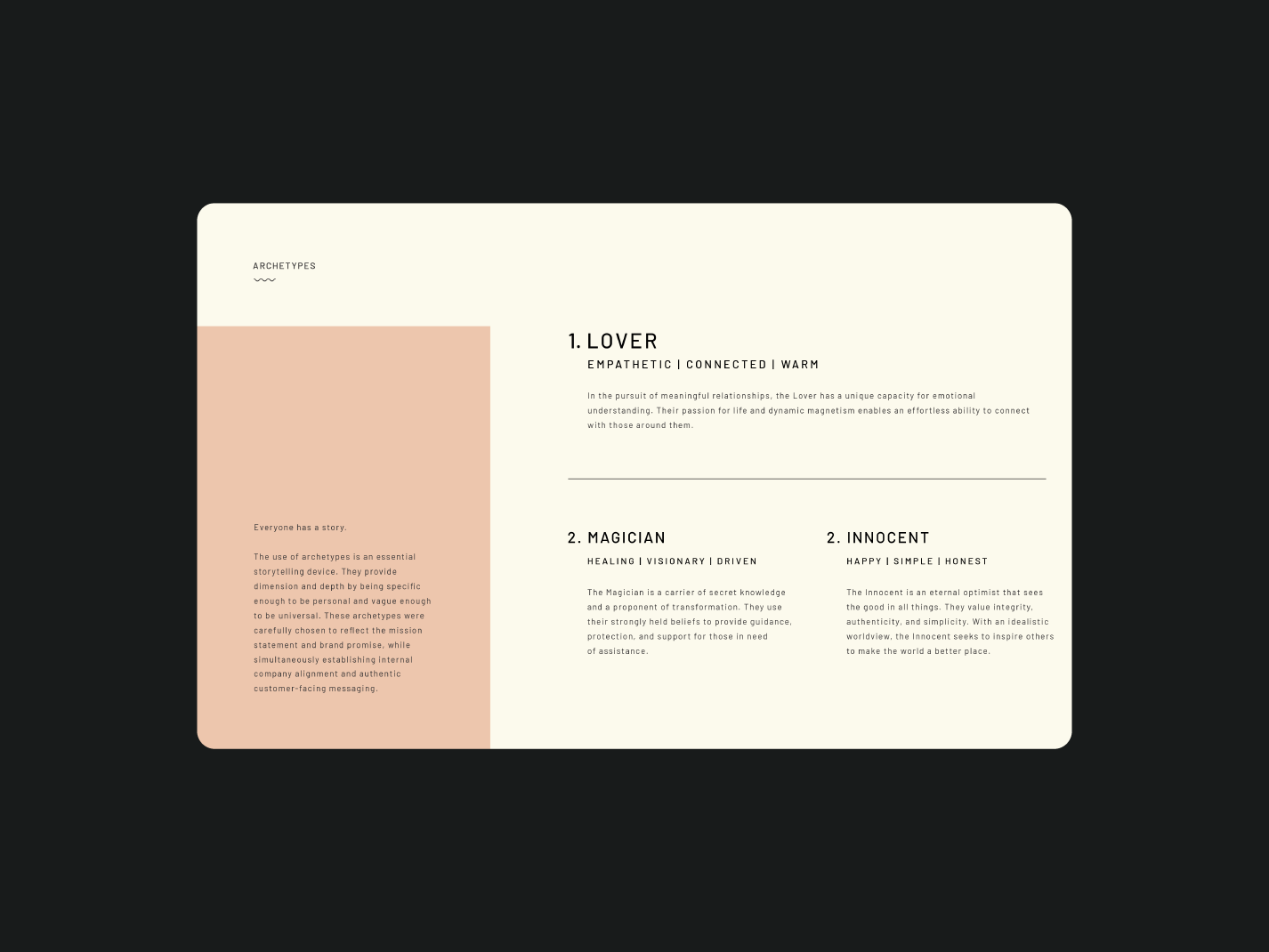
Before any visual work began, we ran a half-day brand workshop with the founder and conducted a formal archetypal analysis, a strategic exercise grounded in human motivational theory that defines a brand’s personality before deciding how it looks. For Hush Pup, that analysis surfaced a three-part foundation:
- The Lover (primary): a brand built on empathy, connection, and deep emotional bonds, because for Hush Pup’s customers, dogs are family
- The Magician (supporting): a brand of knowledge and transformation, equipping owners to understand why their dog struggles and how to change it
- The Innocent (supporting): a brand of simplicity, optimism, and joy, offering a simple answer to a painful problem
The triad told a story on its own. The Magician, curious and seeking understanding, is the dog owner. The Innocent, joyful and uncomplicated, is the dog. And the Lover is the bond between them, which is exactly where Hush Pup’s products live. That single insight became the organizing idea for everything that followed: the brand doesn’t sell treats; it repairs a relationship.
From the archetypes we defined the brand’s tone of voice (empathetic language that forges connection, intelligent language that empowers decisions, joyful language that keeps things simple) and its core values: build meaningful relationships, give joy, act with integrity, be transparent, make a difference. The positioning crystallized into a line that still leads the brand’s story: there are no bad dogs, just bad information.
The identity: wholesome, warm, and unmistakable
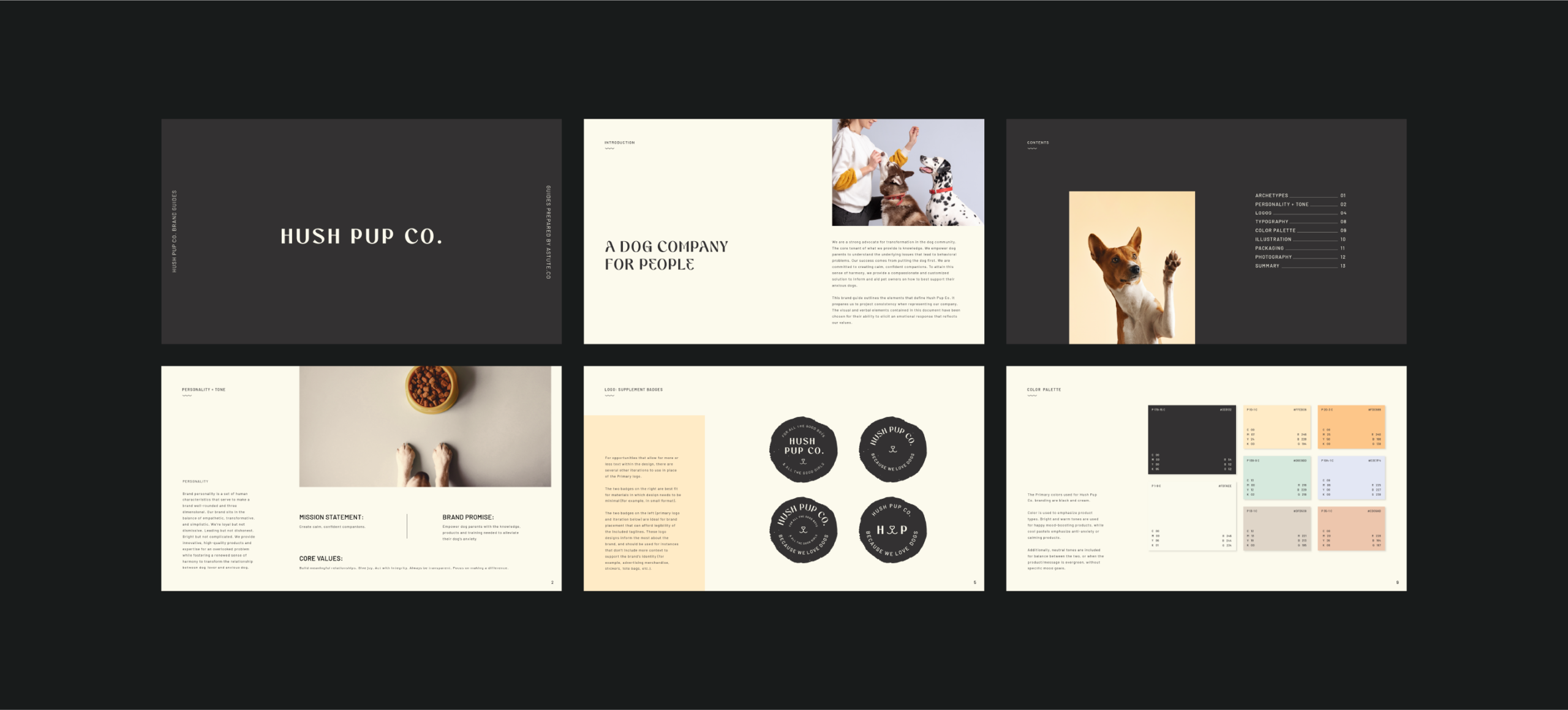
With the strategy set, we designed the complete visual identity: logo design and usage rules, a defined color palette, typographic selections, and custom iconography, including marks for “Made in the USA” and “Organic” that the products needed on-pack.
Every element traces back to the archetypes. The identity is warm without being saccharine, clean without being clinical. It’s a brand as wholesome and fun as the dogs it serves, but credible enough for a product category (canine anxiety and CBD wellness) where trust is everything.
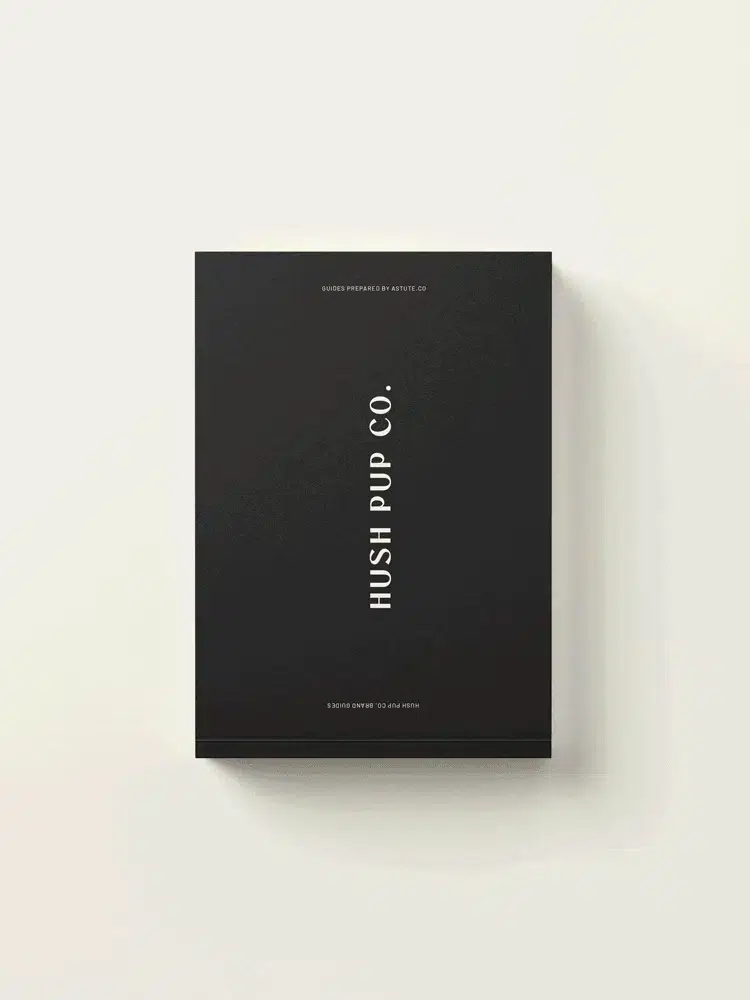
All of it was documented in a comprehensive brand guide covering the visual system, the verbal identity, and the reasoning behind both, so that every future employee, printer, and partner could represent the brand consistently without us in the room.
The packaging: one system, three personalities, six products
Packaging was where the brand had to earn its keep. Hush Pup launched with six products across three lines (Good Pup, Chill Pup, and Happy Pup), and each line needed its own personality while remaining unmistakably one family on a shelf or a screen.
We built a packaging design system rather than six one-off labels. Color, iconography, illustration, and copy work as interchangeable system elements: each product line has its own identifiers and messaging, which help customers navigate between products, while the shared underlying structure keeps the family coherent. Bottle labels, jar labels, and box designs all draw from the same kit of parts.
That systems approach was a deliberate startup decision. A young company’s product lineup changes fast. A label system that flexes protects the founder’s investment in a way that six beautiful but disconnected labels never could: new products slot in, formulations change, and lines extend without a redesign.
The details: branding down to the packing paper
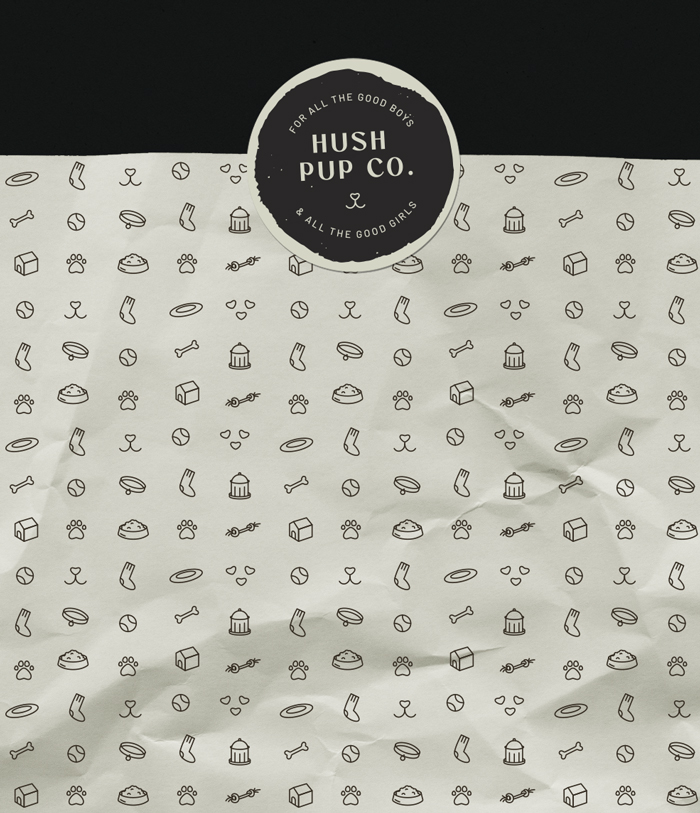
Good branding leaves no material behind. For a company shipping products directly to customers, the unboxing is the storefront, so we designed the shipment experience too: stickers and custom packaging paper featuring a pattern that celebrates a happy dog’s life. Tennis balls, socks, treats, bones, toys, and (of course) fire hydrants.
It’s a small thing. It’s also the moment a customer’s anxious-dog problem meets the brand’s optimism for the first time in the real world, and the moment a startup looks like a company worth trusting.
What a startup gets from branding done in the right order
Hush Pup’s engagement ran from kickoff to finished brand guides in a single season. Workshop, archetypal analysis, logo directions and refinement, color palette, two rounds of label design, and final brand guidelines were delivered in sequence, with the founder involved at every gate.
The order matters more than the speed. Because the strategy came first, no design decision was arbitrary and no revision cycle was a matter of taste. When you know the brand is a Lover supported by a Magician and an Innocent, you know why the language leans empathetic, why the palette stays warm, why the illustrations keep things playful, and you can extend the brand for years without diluting it.
That’s what a new company actually needs from a branding engagement: not just a logo, but a decision-making system. A flexible foundation with room for creativity and expansion, documented well enough to outlive any single designer, agency, or campaign.
Launching something new?
A startup gets one first impression, whether with customers, retailers, or investors. Astute builds brands in the right order: strategy and voice first, then identity, then a packaging and collateral system built to flex as the product line grows.
Good to Know
FAQs About Startup Branding and Package Design
What does a complete branding engagement include?
A full engagement covers strategy and identity: a brand workshop, archetypal or positioning analysis, logo design and usage rules, color palette, typography, iconography, tone of voice, and a brand guide that documents the system. For product companies, it typically extends into packaging and label design plus launch collateral.
What is brand archetype analysis?
It’s a strategic framework, grounded in human motivational theory, that defines a brand’s personality using universal character patterns such as the Lover, the Magician, and the Innocent. Choosing a primary and supporting archetypes before designing anything gives every later decision (voice, color, imagery) a consistent rationale, producing a brand that feels three-dimensional rather than decorated.
Why should packaging be designed as a system instead of label by label?
Startups iterate: products get added, formulations change, lines extend. A design system of shared structure, colors, icons, and illustration styles with line-specific identifiers lets new products join the family without redesign, keeps the brand coherent on the shelf, and costs far less over time than one-off labels.
How long does it take to brand a startup from scratch?
With a decisive founder, a complete brand covering strategy through finished guidelines and packaging can be delivered in a few months. Hush Pup ran from kickoff workshop to final brand guides and six product labels in one summer, with structured checkpoints for feedback at each stage.
Why does a small company need a brand guide?
Because consistency is what makes a small company look established. A brand guide lets every future printer, freelancer, marketplace listing, and hire represent the brand identically, protecting the founder’s investment long after the engagement ends.
Does branding matter for products in new or sensitive categories?
Especially there. Hush Pup sold anxiety products, including CBD formulations, in a category customers approach with both hope and skepticism. A warm, transparent, professionally systematic brand does real work: it signals legitimacy, communicates values before a single word is read, and gives an unproven product borrowed trust.