



When a homeowner’s air conditioning system quits in the middle of a July heatwave, they don’t have time to browse. They’re sweating, they’re stressed, and they need a professional HVAC technician immediately. They grab a smartphone, type a quick search, and call one of the very first options they see. In these situations, customers aren’t making it past page one.
Because heating and cooling is one of the most competitive local service industries on the internet, showing up at the right moment matters. Getting your company into the local map pack, appearing in AI Overviews, and looking great on mobile screens is what keeps your phone ringing. It means the difference between a fully booked calendar and a slow week with techs sitting around.
Let’s jump right into the latest and most effective SEO strategies that’ll help your HVAC business stand out.
Optimizing Your Google Business ProfilE (GBP)
To kick things off, let’s look at the frontline of local search: your Google Business Profile listing (formerly known as Google My Business). Here are six practical ways to tune it up so it stands out in your market.
1. Claim and Verify Your Google Business Profile
Your Google Business Profile is the most important tool you have for winning local jobs. This free listing dictates how your shop appears on Google Maps.
To start, search for your business name on Google and follow the prompts to claim it. Google usually mails a postcard with a small verification code to your shop. Check your mail daily and enter that code immediately. Unverified profiles do not rank well in local searches.
2. Select Your GBP Categories Correctly
Choosing your business categories tells search engines exactly what problems you can fix. Think of these as your target keywords. They will be the most competitive keywords you target as they have the highest monthly search volume. Pick “HVAC Contractor” as your primary category. After that, add accurate secondary categories to capture more search traffic.
Good examples of secondary categories include:
- Air Conditioning Repair Service
- Heating Contractor
- Air Duct Cleaning Service
- Furnace Repair Service
- Heat Pump Repair Service
- And more
There’s no limit to how many you can choose; just be sure you’re strictly including services you offer so Google understands exactly what your HVAC business does.
3. Build a Detailed Service List
Do not leave your service list blank. Think of these as your long-tail keywords. They are less competitive and have less search volume than the main keywords, but they’re highly targeted to the searcher’s needs. This means you are more likely to capture this potential customer’s click if your service matches their query. Type out every single job your team can handle.
For example, include specific items like:
- Ductless mini-split installation
- Thermostat repair and wiring
- Heat pump troubleshooting
- Emergency AC recharging
When a homeowner searches for a highly specific repair, a filled-out service list helps your profile show up.
4. Share Real Photos Every Week
Avoid boring stock photos that look fake. Homeowners want to see the real people they are letting into their houses. Snap crisp pictures of your team out in the community.
Great photo ideas include:
- Your wrapped service vans parked neatly in front of local landmarks.
- Your technicians smiling in clean, matching uniforms.
- Clean before-and-after shots of a brand new furnace installation.
- Your office staff answering phones at the main desk.
In the age of AI, photos of real humans build more trust than ever.
5. Keep Your Operational Hours Accurate
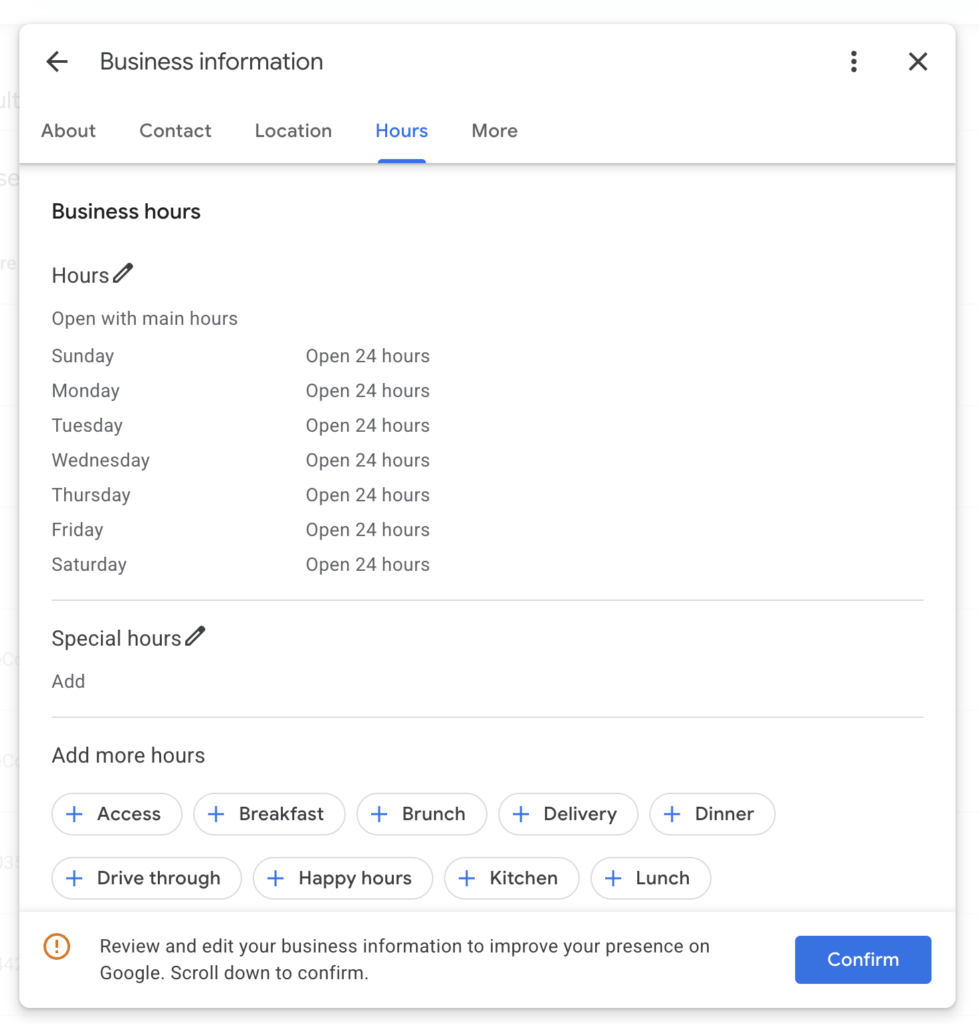
Listing the wrong hours frustrates customers who need help fast. Keep your hours updated, especially during severe weather or major holidays. If you offer 24/7 emergency service, mark that clearly in your profile settings. Homeowners need to know you are awake and ready to pick up the phone when a pipe freezes or an AC unit dies at midnight.
6. Publish Regular Google Business Posts
Think of Google Posts like social media updates for your search profile. Share a new post at least once a week to show search engines your business is active.
Try posting things like:
- Seasonal tune-up discounts in the spring and fall.
- Quick tips, like how to check thermostat batteries.
- Announcements about new technicians joining your team or employees celebrating work anniversaries.
A Review Strategy That Outsmarts Competitors
Once your profile is ready, the next step is building real-world proof that tells search engines and local homeowners you’re the safest choice around. These five simple habits will help you collect glowing feedback effortlessly.
7. Ask for Feedback Right on the Driveway
Gathering continuous reviews is a cornerstone of great seo for hvac companies today. The absolute best time to ask a customer for a five-star review is right after your technician fixes their system. The house is cooling down, and the homeowner is incredibly grateful. Have your technician ask for the review face-to-face before they start their truck to leave.
8. Share a Short Text Message Script
Make the review process completely effortless. If a customer has to search for your company online, they will give up. Have your technicians text a direct review link to the customer while standing in the home.
Here is a great script example:
- “Hi John, this is Mike from ABC Heating. Thanks for choosing us today! Here is a quick link to leave us a review and let us know how your AC repair went: [Insert Link]”
9. Hand Out Physical Leave-Behind Cards
Sometimes homeowners are busy when your technician finishes the repair. Give them a physical reminder to place on their refrigerator.
- Print a bold, scannable QR code on the back of your business cards or invoices.
- Add a simple instruction like: “Scan this code with your phone camera to share your experience!”
10. Write Strategic Responses to Positive Reviews
Never leave a good review sitting there without a reply. Answer every single one. When you reply, naturally include your target keywords and service cities.
- Instead of saying: “Thanks for the review!”
- Try saying: “Thank you for the great feedback, Sarah! We were happy to help with your emergency AC repair in Phoenix today.”
This natural phrasing helps search engines understand your exact service location.
11. Handle Negative Reviews with Kindness
Every business gets a bad review eventually. Do not panic or get defensive. Future customers will read your responses to see how you handle complaints.
- Apologize for the frustration cleanly.
- Provide a phone number and the name of a manager to resolve the problem offline.
- Example response: “We are very sorry your service did not meet your expectations. Please call our manager, Tom, directly at 555-555-5555 so we can make this right for you.”
- If a negative review is demonstrably untrue, you can dispute it using Google’s Review Management Tool and potentially have it removed.
Smart Website Structure and Content Strategies
Beyond your Google listing, your actual website needs to speak the same language as your customers and search algorithms.
Let’s look at how you can organize your pages to answer common questions and naturally attract high-paying jobs.
12. Focus on High Intent Local Keywords
Don’t just target broad words like “HVAC.” While volume is highest on a root keyword like that, so is competition. On top of that, “HVAC” has no clear search intent. Does the user want to know what the acronym means? Do they want to buy a new HVAC system? Are they trying to troubleshoot their own system? You, us, nor Google knows, so Google will provide a Search Engine Results Page (SERP) that gives them a broad variety of options. You’d be competing with anything and everything “HVAC” could mean to anyone and everyone. That’s not a good strategy.
Instead, focus on specific phrases that people type when they need to hire a professional immediately. You want searches who are looking specifically for an “HVAC repair service” or “HVAC installation contractors”, for example. Learning how to market your HVAC business online means knowing the difference between informational searches and buying searches.
Here are some more high-intent phrases you can target:
- AC repair near me
- Furnace replacement contractor in [City Name]
- Emergency heat pump repair
- Affordable cooling company near me
13. Create Individual Pages for Separate Services
Putting all your services on a single, messy page makes it hard for search engines to rank you. Build a unique page for every single core service you offer.
Make sure you have standalone pages for:
- Air conditioning installation and sizing
- Heating repair services
- HVAC maintenance and annual tune-ups
- Indoor air quality and filtration systems
The goal is not to create a unique page for each keyword, but for each topic. Your air conditioning installation page can target multiple keywords, including “AC installation”, “cooling installations”, “air con install”, “install an air conditioner”, and “new air conditioning system” because they are all on the same topic.
14. Build Hyper-Local City Landing Pages
If your fleet services multiple surrounding suburbs or counties, you need dedicated location pages. A homeowner living in a nearby small town will search for service in their specific town.
On each city page, include unique details such as:
- An embedded Google Map showing your specific service area boundaries.
- Real reviews from homeowners who live in that exact town.
- Mentions of local neighborhoods or local community landmarks.
This helps you target those high-value “near me” searches.
15. Format an FAQ Section for AI Overviews
Search engines now display automated direct answers at the top of the page using AI. To get your website featured in these boxes, create an easy-to-read FAQ section. Write out common questions as bold headings. Put a clear, direct answer in the very first paragraph below the question.
- Question Heading: Why is my air conditioner blowing warm air?
- Direct Answer Paragraph: Your air conditioner might blow warm air due to a dirty air filter, a tripped circuit breaker, or a low refrigerant level. Check your filter and breaker box first before calling a certified technician.
16. Back Up Your Claims with Authoritative Data
Linking out to trusted government resources builds massive credibility with search engine algorithms. It shows you follow legitimate guidelines. For example, you can point your readers to the Department of Energy guide on air conditioner maintenance. Referencing their official advice about cleaning clogged evaporator coils proves that your annual maintenance plans follow strict federal recommendations.
17. Educate Customers on Energy Efficiency Savings
Homeowners love learning about ways to lower their monthly utility bills. Write articles that explain how modern upgrades save money over time. You can share insights from the official Energy Star program to highlight how certified heat pumps lower energy use. This helpful content attracts high-paying replacement leads instead of just minor repair jobs.
Technical Performance and Flawless Mobile Design
Great words and helpful articles only work if your website runs beautifully when a customer is in a hurry. Here’s how to keep your site fast, clear, and easy to navigate on a standard smartphone screen.
18. Drastically Speed Up Your Website Load Times
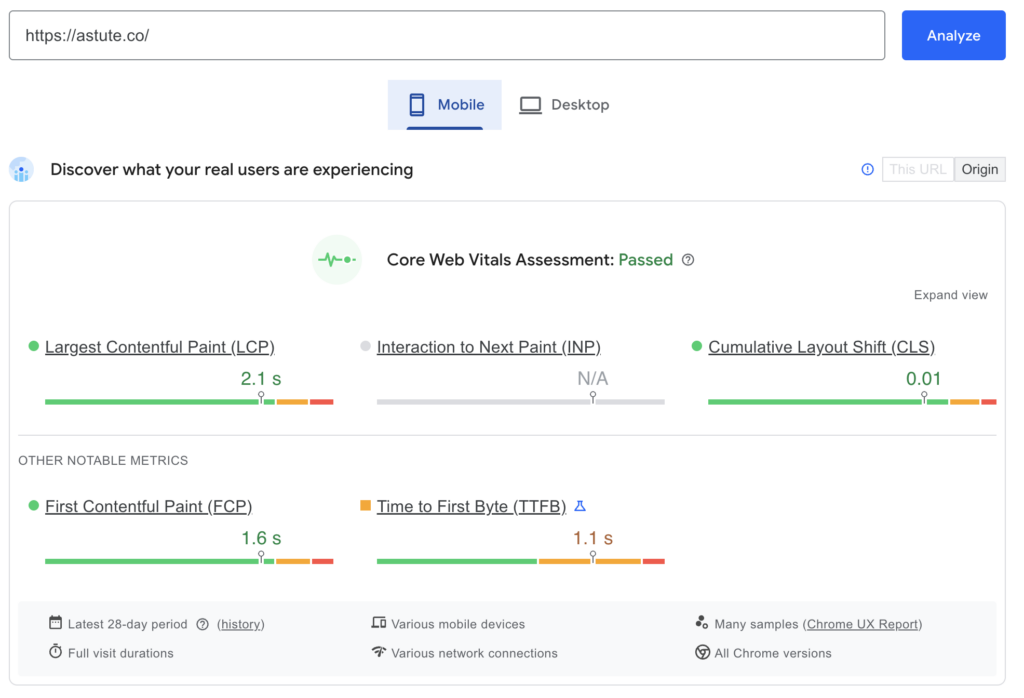
Most emergency searches happen when a home is freezing or boiling. Homeowners are impatient and will hit the back button if your site takes forever to load. Make your site load in under two seconds.
- Compress all large images before uploading them to your site.
- Choose a fast, high-quality website hosting provider.
- Clean up messy website code and disable heavy animations.
Not sure if your site is fast or slow? Use Google’s Core Web Vitals and PageSpeed Insights test to check.
19. Build an Optimized Mobile Layout
Your website must function properly on small smartphone screens. If your text is tiny or your menus are confusing, users will bounce back to Google.
- Check that all text is large enough to read without zooming in.
- Verify that navigation links are spread apart so fingers can tap them easily.
- Remove annoying pop-ups that block the mobile screen.
20. Place a Large Click-to-Call Button at the Top
When a homeowner is in a panic, they don’t want to fill out a long contact form. They want to speak to a real dispatcher immediately.
Place a bold phone number at the top of your mobile website. Turn that number into a click-to-call button. A single tap of a thumb should dial your office instantly.
21. Implement Schema Markup for Review Stars
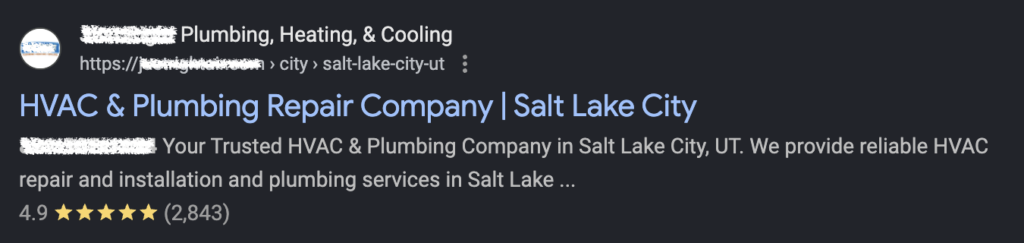
Schema markup is a hidden code that helps search engines read your business data. Adding this code lets your search results look special. The best example of this is Review Schema. When you add it properly, Google will display bright yellow star ratings directly beneath your website link in the normal search results.
Here is an example of how that looks to a user:
- Standard Result: ABC Heating: Fast AC Repair in Dallas. (Just plain text).
- Schema Optimized Result: ABC Heating: Fast AC Repair in Dallas. ★★★★★ (4.9 out of 5 stars based on 142 reviews).
Seeing those bright yellow stars makes your link look incredibly trustworthy, which coaxes more users to click your site instead of a competitor.
22. Maintain a Perfectly Consistent NAP Profile
NAP stands for Name, Address, and Phone number. This data must be exactly the same across every corner of the internet. Search engine algorithms compare your Google Business Profile to other directories. If your address is spelled “123 Main Street” on Google but “123 Main St. Suite B” on Yelp, algorithms get confused. Check all your listings and fix any typos.
Off Page Citations and Tracking Your Success
Finally, you want to spread the word across the rest of the internet while keeping a close eye on where your actual phone calls originate. These last few steps tie your entire local strategy together with a bow.
23. Build Strong Local Directory Citations
Citations are digital listings of your business on authoritative web directories. These act like online votes of confidence for your local SEO for HVAC companies.
Make sure your shop is listed on these major sites:
- Better Business Bureau (BBB)
- Yelp for Business
- Angi
- Your local Chamber of Commerce directory
- Any other relevant local or industry directory
24. Write Highly Readable Title Tags
Your title tag is the blue clickable link that shows up on Google. It needs to tell the user exactly what you do and where you are located. Keep it simple and keep it under sixty characters.
- Good Title Tag Example: Emergency AC Repair in Orlando, FL | ABC Cooling
- Bad Title Tag Example: Home Page – Welcome to ABC Cooling and Heating Services Inc.
25. Craft Action-Oriented Meta Descriptions
The meta description is the short summary paragraph directly under your title tag. It does not change your rankings directly, but it influences whether people click your link.
- Write a helpful, friendly message that promises fast service.
- Example: “Need fast AC repair? Our certified local team offers upfront pricing and same-day emergency service. Call today for a free estimate!”
26. Implement Call Tracking to Measure Lead Volume
You must know exactly which search tactics are generating phone calls. Use call tracking software to assign a unique phone number to your website and another number to your Google Business Profile. This simple step helps you see exactly how many calls come from organic search results versus paid ads. Tracking this data helps you spend your marketing budget wisely.
Local SEO for HVAC Teams: A Summary Checklist for Long-Term Growth
Dominating the local search market requires ongoing consistency. Use this quick checklist to stay on track month after month:
- Post a new real photo to your Google profile every single week.
- Remind technicians to text review links to customers before leaving jobs.
- Verify that your business hours match on every directory site.
- Review your mobile site speed every quarter to keep it lightning-fast.
Investing steady effort into your local search presence guarantees that when a homeowner’s system breaks down, your company is the very first one they call. Keep your information updated, answer common consumer questions honestly, and prioritize a fast mobile experience to watch your call volume climb.
Not sure where to start? Give us a shout. Our expert SEO team at Astute has over a decade of experience helping HVAC companies dominate their local map pack. Contact us for a no-pressure consultation today.